


Explore the discipline
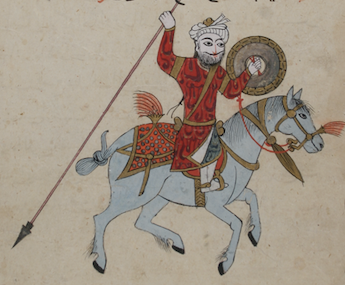
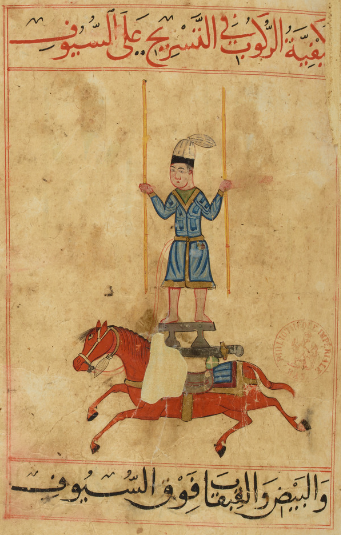
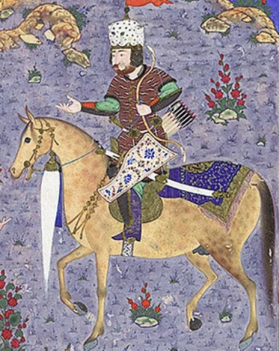
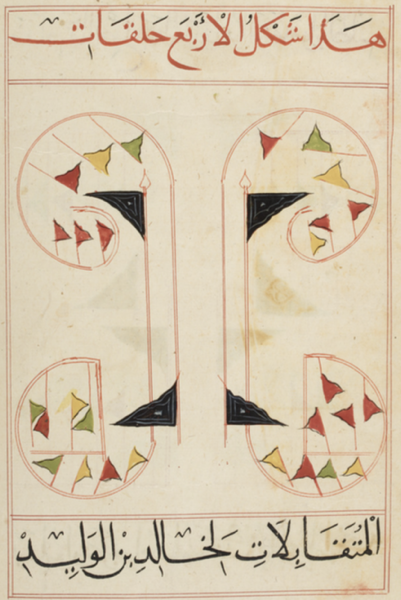
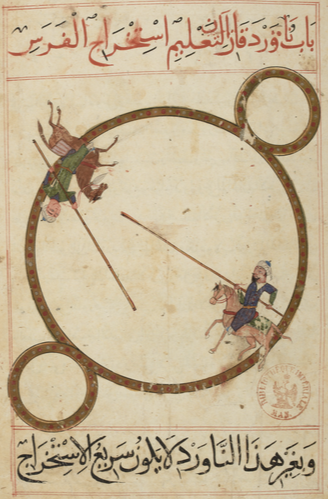
The Historical Eurasian Cavalry Discipline has been designed as a comprehensive system for developing horse and rider and weapons skills equally together, while blending them harmonically together to progress towards the highest level of equestrian martial arts, which means rider and horse together being ready to use their highest level of skills in any unexpected situation (a concept nicely expressed by the Korean idiom 유비무환, transcribed as ‘Yubimuhwan’ and meaning ‘when one is prepared, there is no room to fear the unexpected’). The discipline involves training in archery alongside other weapons.
The tracks and training exercises in the HEC discipline have been engineered with a dynamic mix of and alternation between weapons manoeuvres and riding manoeuvres to help train horses who listen for the next task, rather than anticipate what they think comes next and go into ‘autopilot’ (which is what modern straight tracks generally condition horses to do). Unlike many tracks in the modern practice of horse archery, these tracks are not end goals in themselves–rather, similar to historical practices, these are just exercises and (competitive) tests to assist in creating a well-rounded rider and Eurasian warhorse, which means a horse that has the physical and mental skills to be ready to react athletically in partnership with the rider in any unexpected situation. Thus, the discipline incorporates a training system to help prepare athletes for the highest level of performance in any competitive style of horse archery.
This discipline seeks to reconstruct historical riding and weapons manoeuvres from various Eurasian regions that were used primarily in the 14-16th centuries. This period represented the pinnacle in the development of these cavalry and warhorse education systems in those regions which used the bow alongside other weapons on horseback (before gunpowder significantly eroded the development and use of professional cavalry in armies). Here the word ‘Eurasian’ is used as a convenient umbrella term for the peoples in Eastern Europe and Asia who relied significantly on cavalry and the use of the bow on horseback. However, it is naturally acknowledged that this is a vast region with a wide variety of military cultures and by no means is the term Eurasian meant to oversimplify these regional complexities. The discipline uses a variety of aspects of these cavalry systems, including warhorse training methods, weapons techniques, various kinds of military tack, and functional riding and fighting manoeuvres used or meant to be used 1) in actual battle, 2) in military exercises (some of which are just exercises to work on skills necessary for battle, but the exact exercises themselves would not be used in battle), 3) in games designed to keep martial skills sharp during peacetime (e.g. chogān), and 4) in public ceremony/displays. Currently, much of the current HEC system stems from West Asian sources, but input from East Asian sources is very welcome as the discipline develops.
The goal of the discipline is to adapt and codify this material into a logical and comprehensive training system for horse and rider (with some competitive tests) that is properly representative and descendant of the equestrian skills that come from certain Eurasian equestrian martial arts, just as working equitation has done largely based on doma vaquera and vaquero, which are descendants of an Iberian tradition of herding animals with horses (as well as, farther back in time, training warhorses in the Iberian peninsula).

